Busy all week, but the bank account still feels tight
Many HVAC owners feel this. The phones ring. The board is full. Techs are in the field. But cash in the bank does not match how hard the team is working.
The pressure often shows up at the worst times: payroll week, slow shoulder seasons, or right when you are trying to grow and hire. On the surface it looks like a money problem. Underneath, it is usually a timing and operations problem.

Why a busy HVAC company can still feel cash-tight
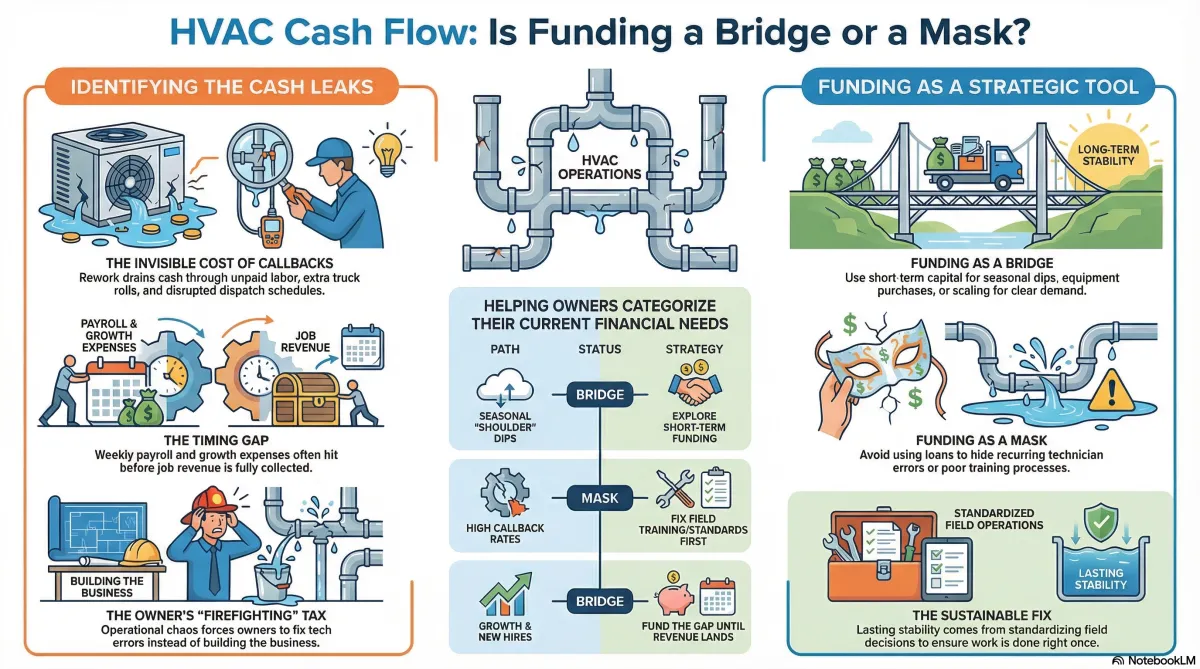
Cash does not flow the same way the schedule fills. You can be booked out and still be behind on cash because of what happens between the call, the install, and the final payment.
Common pressure points:
- Callbacks and rework that eat hours but bring in no new money
- Payroll that must be paid every week or two, even when jobs have not fully funded yet
- Growth that pulls cash into trucks, tools, parts, and training before the new revenue fully lands
- Slow pay from customers, builders, or commercial accounts that stretches out the cash cycle
How callbacks quietly drain your cash flow
Most owners track revenue. Fewer track the cost of callbacks. Yet callbacks are often where profit and cash quietly leak out of the business.
- Unpaid labor: Tech hours spent fixing old work instead of running new revenue-producing calls.
- Extra truck rolls: Fuel, wear and tear, and time in traffic for calls that should not be needed.
- Dispatch disruption: Callbacks take priority, push out paying work, and make the board harder to manage.
- Customer frustration: Even when you make it right, trust takes a hit. That can cost future jobs and referrals.
- Owner firefighting: You get pulled into problem calls, angry customers, and team issues instead of building the business.
None of these show up as a single big bill. But together, they slow cash coming in and add cost going out.
When business funding can make sense
Used carefully, outside funding can act like a bridge. It helps you cross short cash gaps without shutting down growth or missing key payments.
Situations where funding may be reasonable to explore:
- Short-term payroll gaps when timing between jobs and deposits is off.
- Seasonal cash dips between busy periods, when you know the work is coming but it is not here yet.
- Equipment or vehicle purchases that are needed to keep the team productive and safe.
- Growth outpacing cash, when you are adding techs and trucks and have clear demand to support them.
- Recovering from rework-heavy weeks that temporarily spiked labor and parts without matching revenue.
When funding makes things worse
Funding adds a payment. If the root problems stay the same, cash pressure can actually rise instead of fall.
Times when funding can make things harder:
- Covering ongoing callback problems instead of fixing why installs and repairs come back.
- Avoiding the hard work of improving technician decision-making in the field.
- Masking dispatch, training, or process issues that are causing chaos on the board every week.
In these cases, funding does not solve the strain. It just stretches it out and adds another bill to manage.
Funding is a bridge, not the fix
Healthy HVAC companies sometimes use funding. The key is how you think about it. Funding can be a tool to cross from where you are today to where your cash flow will be stronger. It is not the fix on its own.
The real fix comes from fewer callbacks, clearer standards in the field, steady pricing, and tight processes from call booking to job closeout. Funding may give you breathing room while you work on those areas.
Want to see if funding might help your situation?
Every shop is different. Job mix, team size, season, and local market all play a part. Before you add a payment, it helps to look at how callbacks, rework, and growth are really affecting your cash picture.
Long-term stability comes from fewer callbacks and better field decisions
Over the long run, the strongest HVAC companies make cash more predictable by making work more predictable. That means fewer surprises in the field, fewer callbacks, and more jobs done right the first time.
When technicians follow clear standards, they make the same quality choices on every call. Dispatch can plan the day with more confidence. You can trust that the work leaving the shop will come back as cash, not as another callback on the board.
TrustBuilt is a training and standards company focused on this side of the business. We help HVAC teams reduce callbacks, tighten up decision-making in the field, and create simple standards that everyday techs can follow on real jobs.
TrustBuilt is not a lender and does not provide financial, tax, or legal advice. Any funding decisions should be made with a qualified financial professional who understands your specific situation and local regulations.